How to Measure the Impact of B2B Marketing Activities on Sales Pipeline Growth
B2B marketing teams often track website traffic, email clicks, webinar registrations and leads to evaluate campaign performance. However, these numbers do not always show whether marketing is helping generate sales opportunities. Mercadeo helps businesses approach B2B marketing with a focus on measurable outcomes, connecting campaign performance with lead quality, sales engagement and pipeline growth.
Tools such as HubSpot and Microsoft Dynamics 365 can help marketing and sales teams organise campaign data, track prospect interactions and understand how marketing activities contribute to revenue opportunities. The key is to measure more than lead volume.
Why Measuring Marketing’s Impact on the Sales Pipeline Matters
A campaign can generate hundreds of leads without producing meaningful sales opportunities. This may happen when the audience is not relevant, the offer does not match buyer needs or leads are not followed up promptly.
Measuring marketing’s impact on sales pipeline growth helps businesses identify which activities attract suitable prospects, influence buying decisions and support sales conversations. It also helps teams make better decisions about campaign budgets, content investments and channel priorities.
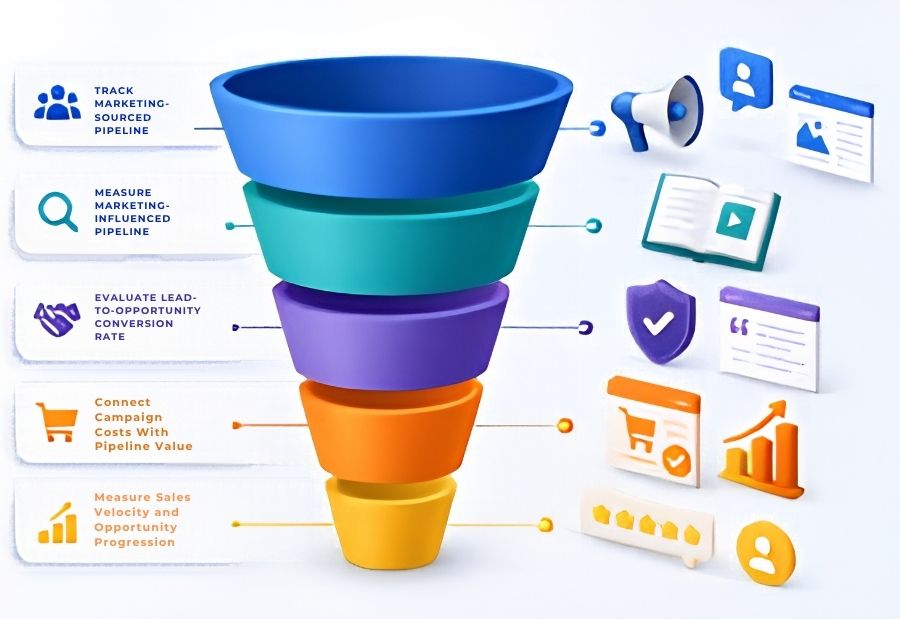
1. Track Marketing-Sourced Pipeline
Marketing-sourced pipeline refers to sales opportunities that originate from marketing activities. For example, a prospect may download a research report, attend a webinar or submit a website enquiry before becoming a qualified sales opportunity.
To calculate marketing-sourced pipeline, add the potential value of qualified opportunities attributed to marketing as the originating source.
Marketing-sourced pipeline = Total value of sales opportunities sourced by marketing
Track this metric by campaign, channel and reporting period. It can help identify whether activities such as organic search, paid advertising, email campaigns or industry events are generating opportunities with commercial potential.
However, define what counts as a marketing-sourced opportunity before comparing results across teams.
2. Measure Marketing-Influenced Pipeline
Not every opportunity begins with marketing. A prospect may already be in the sales process and later attend a webinar, read a case study or engage with an email campaign.
Marketing-influenced pipeline measures the value of opportunities where a defined marketing interaction occurred during the buying journey.
For reliable reporting, establish clear rules for what qualifies as influence. For example, a meaningful interaction could include attending a product demonstration or engaging with a relevant research report. A simple email impression may not provide sufficient evidence of influence.
Keep marketing-sourced and marketing-influenced pipeline separate to avoid double-counting opportunities.
3. Evaluate Lead-to-Opportunity Conversion Rate
Lead volume shows how many prospects enter the funnel, while lead-to-opportunity conversion indicates how many progress into the sales pipeline.
Use this formula:
Lead-to-opportunity conversion rate = (Leads converted into opportunities ÷ Total leads) × 100
Compare conversion rates across channels and campaigns. A campaign generating fewer leads may be more valuable if a larger proportion of those leads become qualified opportunities.
Segment results by lead source, industry, company size and campaign type to identify patterns in lead quality.
4. Connect Campaign Costs With Pipeline Value
Marketing teams should evaluate campaign costs alongside the opportunities generated. Relevant metrics include cost per qualified opportunity, pipeline generated per unit of marketing spend and return on marketing investment.
For example, Campaign A may generate 100 leads at a low cost, while Campaign B generates 35 leads at a higher cost. If Campaign B produces more qualified opportunities and a stronger pipeline value, it may offer better commercial potential.
Avoid evaluating campaigns solely on cost per lead. Include lead quality, sales progression and opportunity value in the comparison.
5. Measure Sales Velocity and Opportunity Progression
Sales velocity indicates how quickly opportunities move through the pipeline and how much potential revenue the pipeline may generate over time.
A commonly used formula is:
Sales velocity = (Number of opportunities × Average deal value × Win rate) ÷ Average sales cycle length
Marketing can support sales velocity by providing relevant case studies, product comparisons, educational content and follow-up campaigns that address buyer questions.
Monitor whether opportunities associated with specific campaigns progress faster, stall less frequently or reach later sales stages more consistently. These patterns can reveal where marketing content supports the buying process.
6. Build a Shared Marketing and Sales Dashboard
A shared dashboard helps marketing and sales teams work from consistent data. Include the following metrics:
- Marketing-sourced pipeline value
- Marketing-influenced pipeline value
- Lead-to-opportunity conversion rate
- Cost per qualified opportunity
- Opportunity win rate
- Average sales cycle length
- Pipeline value by campaign and channel
Use consistent campaign naming, lead-source definitions and CRM records. Review attribution rules regularly, particularly when prospects interact with several channels before becoming customers.
Common Measurement Mistakes to Avoid
Teams can misinterpret results when they attribute an opportunity to only the last interaction, count the same opportunity across multiple reports or compare campaigns with different timeframes.
Other problems include incomplete CRM data, inconsistent lead qualification and measuring campaign performance before the sales cycle has progressed sufficiently.
Use a consistent measurement framework and review both early indicators, such as qualified leads and later outcomes, such as opportunities and closed revenue.
Final Thought
Measuring the impact of B2B marketing activities requires a clear connection between campaign engagement and sales outcomes. Marketing-sourced pipeline, influenced pipeline, conversion rates, opportunity costs and sales velocity provide a more complete view than traffic or lead volume alone.
Mercadeo can help businesses focus their B2B marketing measurement on lead quality, campaign effectiveness and pipeline contribution. With reliable data and shared marketing-sales definitions, teams can prioritise activities that support stronger sales opportunities and sustainable growth.
About The Author
