5 Free AI Tools Every Marketer Should Use
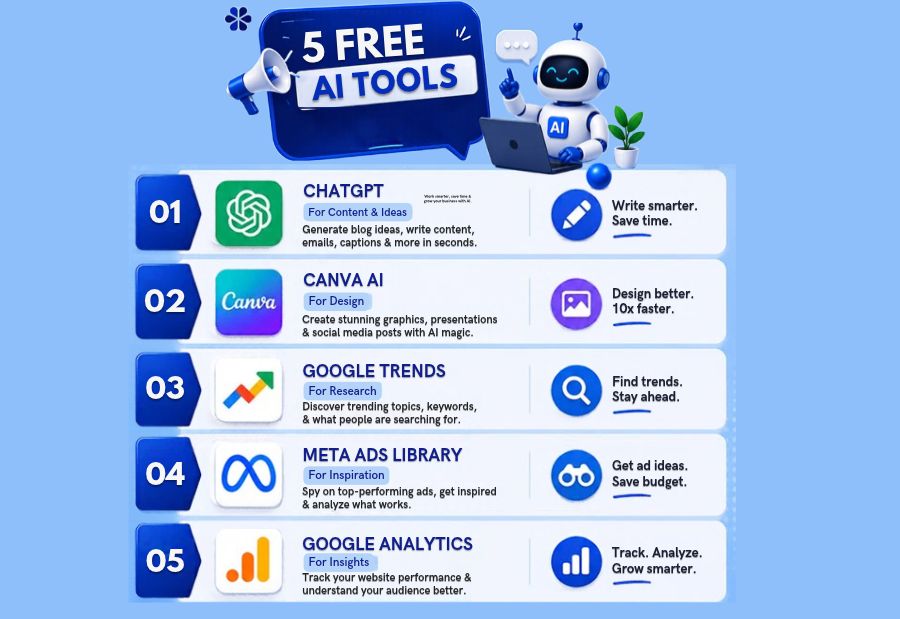
Marketing teams manage several activities, including content creation, market research, graphic design, competitor analysis and campaign performance tracking. Handling these tasks manually can consume considerable time and resources. Free AI tools for marketers and other digital marketing platforms can simplify everyday workflows, support creative tasks and help professionals make informed decisions. Tools such as ChatGPT, Canva AI, Google Trends, Meta Ads Library and Google Analytics offer useful features that marketers can explore without purchasing a subscription.
Each tool serves a different purpose, from developing content ideas to analysing website performance. Here is how marketers can use them in their daily activities.
1. ChatGPT: For Content Creation and Marketing Ideas
Website: https://chatgpt.com/
ChatGPT helps marketers with content planning, brainstorming, writing and research. It can generate blog topics, prepare content outlines, draft social media captions and suggest different versions of advertising messages.
For example, a B2B marketing team planning its monthly content calendar can use ChatGPT to identify relevant industry topics, organise them into content categories and prepare initial blog outlines. It can also help marketers adapt a single campaign message for different audience segments.
How marketers can use ChatGPT:
- Generate blog topics and content outlines.
- Draft email campaigns and social media captions.
- Develop advertising copy variations.
- Brainstorm campaign concepts and content strategies.
- Summarise information and organise research.
ChatGPT offers a free plan with access to several features, although advanced tools such as file analysis, image generation and research have usage limits. <Cite refs={[“turn137991search0″,”turn137991search2”]}/>
2. Canva AI: For Graphic Design and Visual Content
Website: https://www.canva.com/
Visual communication plays an important role in digital marketing. Canva AI combines design features with AI-assisted capabilities that help marketers create social media posts, presentations, promotional graphics and other marketing materials.
Instead of designing every visual from scratch, marketers can use templates and editing features to develop creative assets. Its AI capabilities can also assist with generating content, editing visuals and exploring design ideas.
How marketers can use Canva AI:
- Create social media graphics and promotional creatives.
- Design presentations and marketing materials.
- Generate and edit visual content using available AI features.
- Maintain consistent branding across different platforms.
- Prepare visual assets for blogs and newsletters.
Canva offers a free plan with templates, design tools and limited AI access. Some advanced AI features require a paid subscription. <Cite refs={[“turn137991search3″,”turn137991search6”]}/>
3. Google Trends: For Market Research and Trend Discovery
Website: https://trends.google.com/
Understanding what audiences are searching for can help marketers identify relevant content opportunities. Google Trends allows users to explore search interest over time, compare topics and discover regional search patterns.
For example, a marketer planning a blog on B2B marketing can compare interest in topics such as account-based marketing, lead generation and marketing automation. This can help identify changing audience interest and support content planning.
How marketers can use Google Trends:
- Identify popular and rising search topics.
- Compare interest in different keywords and subjects.
- Explore regional search patterns.
- Discover related searches and content ideas.
- Identify seasonal trends that may influence campaigns.
Google Trends is free to use. Its Explore page also includes AI-assisted trend discovery features powered by Gemini in supported experiences. <Cite refs={[“turn379162search0″,”turn379162search2″,”turn379162search5”]}/>
4. Meta Ads Library: For Competitor Advertising Research
Website: https://www.facebook.com/ads/library/
Before launching an advertising campaign, marketers can review how other businesses communicate their products and services. Meta Ads Library provides access to advertisements currently running across Meta platforms.
Marketers can search by advertiser or keyword to explore available ads, review creative formats and understand how different brands present their messages. This can provide inspiration when developing new campaign concepts.
How marketers can use Meta Ads Library:
- Explore competitors’ active advertisements.
- Review advertising messages and creative formats.
- Identify different promotional approaches.
- Compare how brands communicate their offerings.
- Find inspiration for new advertising campaigns.
Meta Ads Library is a free research resource. However, it does not provide complete performance metrics such as competitors’ clicks, conversions or return on ad spend. <Cite refs={[“turn137991search10”]}/>
5. Google Analytics: For Website Performance and Audience Insights
Website: https://analytics.google.com/
Understanding website performance is essential for evaluating digital marketing activities. Google Analytics helps marketers analyse website and app interactions, understand traffic sources and monitor user engagement.
For example, businesses can review which marketing channels bring visitors to their websites, identify frequently visited pages and track important actions such as form submissions or purchases when these events are configured.
How marketers can use Google Analytics:
- Monitor website traffic and user engagement.
- Identify top-performing landing pages.
- Understand traffic acquisition channels.
- Track conversions and important website events.
- Evaluate how visitors interact with website content.
The standard Google Analytics 4 version is free, while Google Analytics 360 offers additional capabilities for organisations with more advanced requirements. <Cite refs={[“turn379162search7″,”turn379162search14”]}/>
How to Combine These Tools in a Marketing Workflow
Using individual tools for different activities can create a more organised marketing process. Marketers can combine them in the following sequence:
- Google Trends: Identify relevant search topics and audience interests.
- ChatGPT: Develop content ideas, outlines and campaign messages.
- Canva AI: Create visual assets for blogs and social media.
- Meta Ads Library: Research competitor advertisements and creative approaches.
- Google Analytics: Measure website traffic, engagement and conversions.
This workflow connects research, content development, campaign planning and performance analysis.
Final Thought
Free AI and marketing tools can help professionals manage everyday activities more efficiently. From developing content ideas and designing promotional creatives to researching market trends and analysing website performance, these platforms support different stages of the marketing process.
However, technology alone does not guarantee better campaign results. Marketers still need to verify information, understand their audiences and maintain brand consistency. Mercadeo believes that combining the right tools with a well-planned marketing strategy can help businesses create more organised, relevant and effective marketing campaigns.
About The Author
