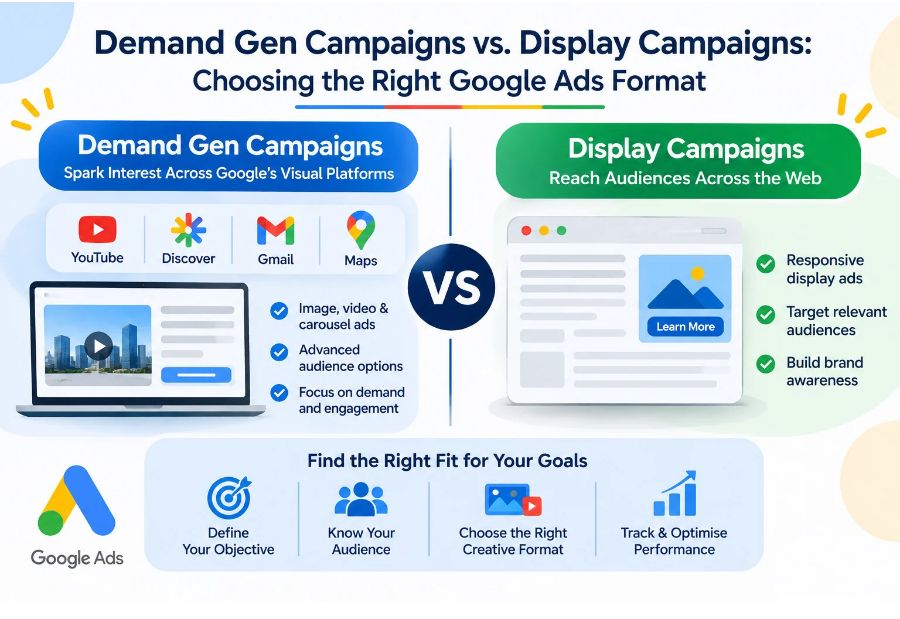
Demand Gen Campaigns vs. Display Campaigns: Choosing the Right Google Ads Format
Digital advertising is no longer limited to showing banner ads across websites. Businesses can now use visual advertising formats to introduce products, reach new audiences and encourage customer engagement across multiple digital platforms. Google Ads offers Demand Gen campaigns and Display advertising capabilities to support these objectives. Understanding Demand Gen campaigns vs. Display campaigns helps marketers select suitable formats, plan creative assets and manage advertising performance. Mercadeo helps businesses connect paid advertising strategies with their wider lead generation and marketing goals.
Although both approaches use visual advertising, they differ in campaign structure, audience engagement and available placements.
What Are Demand Gen Campaigns?
Demand Gen campaigns are Google Ads campaigns designed to generate interest and encourage users to take action through visual advertising experiences.
They can serve ads across YouTube, including Shorts, Discover, Gmail, Google Maps and the Google Display Network, subject to campaign settings and format eligibility.
Demand Gen supports image, video, carousel and other creative formats. Advertisers can use audience segments, customer data and lookalike segments to reach people who may be interested in their products or services.
For example, a B2B marketing company can use video and image creatives to introduce its services to relevant audiences, encourage website visits and generate enquiries.
What Are Display Campaigns?
Traditional Google Display campaigns use the Google Display Network (GDN) to show visual advertisements across websites, apps and other participating placements.
These campaigns can help businesses reach users while they browse online content, research topics or interact with websites and applications.
Common Display advertising formats include responsive display ads and uploaded image ads. Advertisers can use audience-based and contextual targeting to reach users based on interests, previous interactions or the content they are viewing.
For example, a software company can use display advertising to reach relevant audiences and reconnect with people who previously visited its website.
Demand Gen Campaigns vs. Display Campaigns: Key Differences
1. Advertising Placements
Traditional Display campaigns primarily focus on the Google Display Network, which includes participating websites and apps.
Demand Gen provides access to a broader range of visual advertising placements, including YouTube, Discover, Gmail, Google Maps and the Google Display Network. Advertisers can use channel controls to select eligible placements based on their campaign objectives.
2. Creative Formats
Display campaigns commonly use responsive display ads and uploaded visual assets.
Demand Gen supports a wider mix of visual experiences, including image ads, video ads and carousel formats. This gives marketers more opportunities to present products, demonstrate services and communicate brand messages.
3. Audience Targeting
Display campaigns support options such as remarketing, custom segments, interest-based targeting and contextual targeting.
Demand Gen also offers audience-focused targeting capabilities, including customer data and lookalike segments. These options can help businesses reach new audiences who share characteristics with existing customers.
4. Campaign Objectives
Display campaigns are commonly used for brand awareness, reach, remarketing and website traffic.
Demand Gen is designed to generate interest and encourage actions across visual-first Google surfaces. Depending on the campaign setup, advertisers can optimise towards clicks, conversions or conversion value.
5. Creative and Channel Control
Traditional Display campaigns focus on advertising placements across the Display Network.
Demand Gen provides channel controls that allow advertisers to select where eligible ads appear. For example, a business with vertical video creatives may prioritise YouTube Shorts, while another may focus on Discover or other available placements.
6. Performance Measurement
Both campaign approaches can be evaluated using impressions, clicks, conversions, cost per conversion and conversion value.
Demand Gen also provides channel and format-level reporting options that can help advertisers understand which placements and creative types contribute to performance. Advertisers should compare results using consistent conversion definitions and attribution settings.
Demand Gen vs. Display Campaigns: Comparison Table
| Comparison area | Traditional Display campaigns | Demand Gen campaigns |
| Main focus | Visual advertising across the Display Network | Generating interest and action across visual Google surfaces |
| Placements | Google Display Network | YouTube, Discover, Gmail, Maps and GDN |
| Creative formats | Responsive and uploaded display ads | Image, video, carousel and other supported formats |
| Audience options | Remarketing, contextual and audience targeting | Audience segments, customer data and lookalike segments |
| Common objectives | Awareness, reach and remarketing | Demand creation, engagement and conversions |
| Channel controls | Primarily Display Network settings | Controls across eligible visual channels |
When Should Businesses Use Demand Gen Campaigns?
Demand Gen can be suitable when businesses want to introduce products, build interest among new audiences and encourage users to engage with visual content.
Consider it when:
- You want to reach audiences across YouTube and Discover.
- Your campaign uses engaging image or video creatives.
- You want to test different visual formats.
- You want to reach new audiences using customer-based and lookalike segments.
- Your objective includes generating demand and measurable conversions.
For example, a B2B company launching a new service can use Demand Gen creatives to explain its offering, share customer benefits and direct interested users to a dedicated landing page.
When Should Businesses Use Display Advertising?
Traditional Display advertising can be relevant when businesses want to reach users across websites and apps through visual placements, particularly when managing an existing Display campaign.
It may be suitable for:
- Website remarketing
- Visual brand awareness campaigns
- Contextual advertising
- Reaching relevant audiences while they browse online content
- Supporting broader campaign visibility
However, advertisers should review Google’s current campaign migration options and available features before creating or maintaining a traditional Display campaign.
How to Choose the Right Campaign Format
Before selecting a campaign type, consider the following factors:
Define the campaign objective: Decide whether the priority is brand awareness, website visits, audience engagement or conversions.
Understand your audience: Identify where potential customers spend time and which audience signals are relevant to your offering.
Evaluate creative assets: Check whether you have suitable image, video and carousel creatives for the intended placements.
Set up conversion tracking: Ensure that important actions, such as form submissions, demo requests and purchases, are measured correctly.
Monitor placement performance: Review where ads appear and compare results by channel, creative format and audience segment.
Test and optimise: Run controlled experiments where possible and use performance data to improve targeting, messaging and budget allocation.
Important Google Ads Update: Display Campaigns Are Moving to Demand Gen
Google is transitioning its Display advertising campaigns into Demand Gen. Eligible advertisers have been able to begin voluntary migration through the Google Ads migration tool since June 2026. Google has also indicated that new Display campaigns will eventually be created within Demand Gen, with remaining eligible campaigns migrated later.
This means the distinction between Demand Gen and Display campaigns is evolving. Businesses should check the latest options available in their Google Ads accounts before planning new campaigns or making changes to existing ones.
Final Thought
Demand Gen and traditional Display campaigns offer different approaches to visual advertising. Display campaigns have focused on reaching audiences across the Google Display Network, while Demand Gen expands visual advertising across additional Google surfaces and provides more creative and channel controls.
The right approach depends on campaign objectives, audience requirements, creative resources and available account features. Mercadeo can help businesses evaluate paid advertising opportunities, improve campaign measurement and align Google Ads activities with lead generation and business growth objectives.
About The Author
