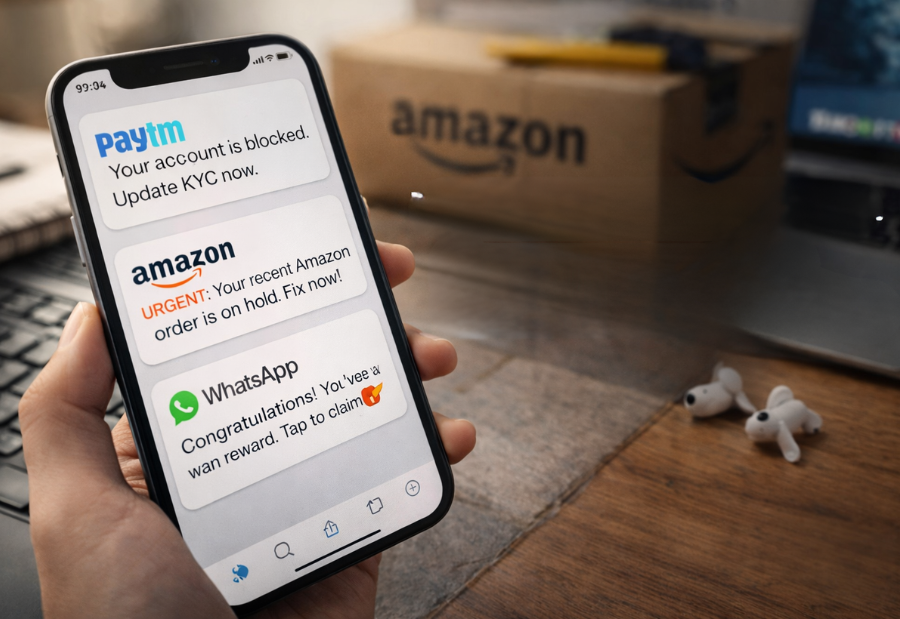
Paytm. Amazon. WhatsApp. How Cyber Scams Are Exploiting Marketing Tactics
“Limited-time offer.”
“Your account will be blocked.”
“Click here to claim your reward.”
Sounds like marketing, right?
That’s exactly the problem.
Today’s cyber scams don’t look like scams anymore—they look like well-crafted marketing campaigns. And that’s what makes them dangerous.
When Marketing Tactics Turn into Manipulation
Cybercriminals are no longer relying on poor grammar or obvious tricks. They’re using the same strategies that brands use to drive engagement:
- Urgency (“Offer expires soon”)
- Personalization (“Hi [Your Name]”)
- Trust signals (logos, brand names, fake verification)
- Emotional triggers (fear, excitement, curiosity)
The line between smart marketing and smart scams is getting thinner.
How Scammers Mimic Trusted Brands
Amazon — Fake Delivery Alerts
Scammers send messages about missed deliveries or payment issues, prompting users to click malicious links.
Tactic used: Urgency + familiarity
WhatsApp — Phishing Links & Forwarded Messages
Fraudulent links promising prizes, discounts, or account updates spread quickly through contacts.
Tactic used: Social proof + trust
Paytm — Payment Requests & KYC Scams
Users receive fake requests or calls asking for OTPs or KYC updates.
Tactic used: Authority + fear
Why These Scams Work
Cyber scams succeed because they tap into human psychology, just like good marketing:
✔ People react quickly to urgency
✔ Familiar brands build instant trust
✔ Personalized messages feel authentic
✔ Emotional triggers override logic
In short, scammers don’t hack systems—they hack behavior.
The Impact on Brands and Marketing
Cyber scams don’t just affect users—they damage brand trust.
- Customers become skeptical of real campaigns
- Engagement rates drop due to fear
- Brand reputation suffers
This forces companies to invest more in secure, transparent communication.
How Marketers Can Respond
1. Build Trust Through Transparency
Clearly communicate official channels and warn users about scams.
2. Avoid Overusing Urgency
Too many “limited-time” messages can make real campaigns look suspicious.
3. Educate Your Audience
Awareness campaigns can reduce fraud and build credibility.
4. Strengthen Brand Authentication
Verified accounts, secure links, and consistent messaging matter more than ever.
How Consumers Can Stay Safe
- Never share OTPs or sensitive details
- Verify links before clicking
- Avoid offers that feel “too good to be true”
- Check official apps or websites directly
The Future of Marketing in a Scam-Prone World
As digital interactions grow, trust will become the most valuable currency in marketing.
Brands that prioritize security, clarity, and authenticity will stand out—not just as marketers, but as trusted platforms.
Final Thought
Cyber scams are evolving by learning from marketing.
Now marketing must evolve to protect trust.
Because in the end, the most powerful campaign isn’t the one that converts—
it’s the one that makes customers feel safe.
About The Author
