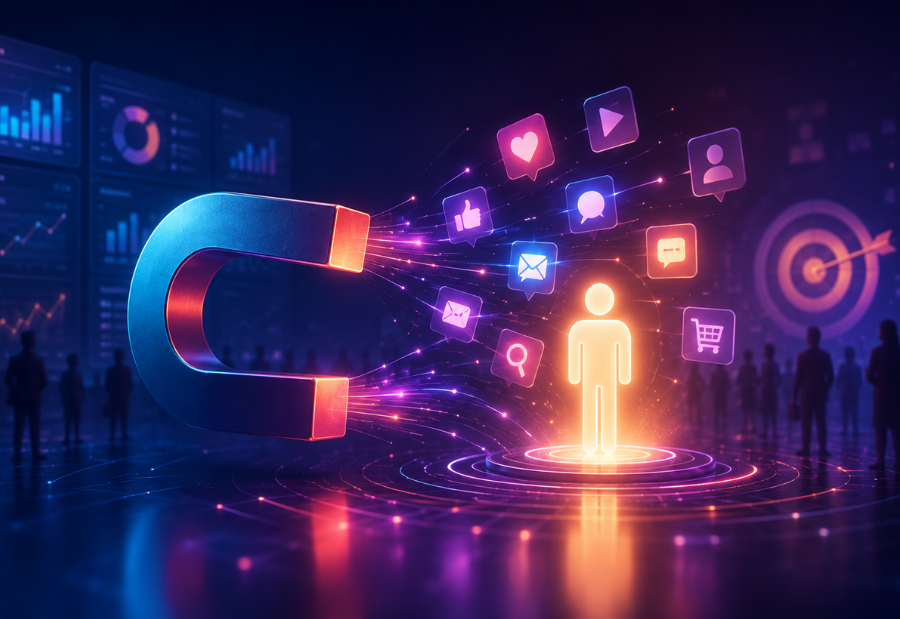
The New Age of Marketing: Where Attention Becomes Experience
Apple, Nike, Coca-Cola, Amazon, and Spotify are no longer just competing for market share—they are competing for moments of human attention. And in today’s digital-first economy, attention is not bought; it is earned, shaped, and sustained through deeply personalized experiences.
Marketing has shifted from broadcasting messages to engineering ecosystems. The brands that once relied on mass campaigns are now investing heavily in micro-moments—those split seconds where a consumer feels understood, seen, and emotionally connected. Apple does this through product storytelling that makes technology feel intimate. Nike transforms fitness into identity. Coca-Cola continues to sell nostalgia rather than beverages. Amazon turns convenience into expectation, and Spotify curates emotion through data-driven soundtracks of daily life.
At the heart of this transformation is data—but not data alone. It is the interpretation of behavior, intent, and context that defines modern marketing success. Every click, pause, skip, and search becomes a signal. The brands that win are not those that collect the most data, but those that translate it into relevance without feeling intrusive.
Another defining shift is the rise of experience-led branding. Consumers no longer separate product from experience; they see them as one. A mobile app is not just a tool—it is the brand. A delivery timeline is not just logistics—it is trust. A playlist is not just music—it is emotional regulation. This is why companies are investing in design, UX, and storytelling as core marketing pillars rather than supporting functions.
Influence has also decentralized. Traditional advertising still matters, but peer validation, creator ecosystems, and community-driven narratives now shape perception faster than any campaign. Brands are learning to participate rather than dictate conversations. Authenticity is no longer a tagline—it is a survival strategy.
Yet, amidst automation, AI-driven targeting, and algorithmic personalization, the human element remains the differentiator. Consumers may engage with machines, but they connect with meaning. The most successful marketing strategies today balance precision with empathy, efficiency with emotion, and scale with intimacy.
The future of marketing is not about louder messages. It is about quieter, smarter, and more relevant ones. Brands that understand this will not just capture attention—they will become part of people’s everyday lives in ways that feel natural, seamless, and indispensable.
About The Author
