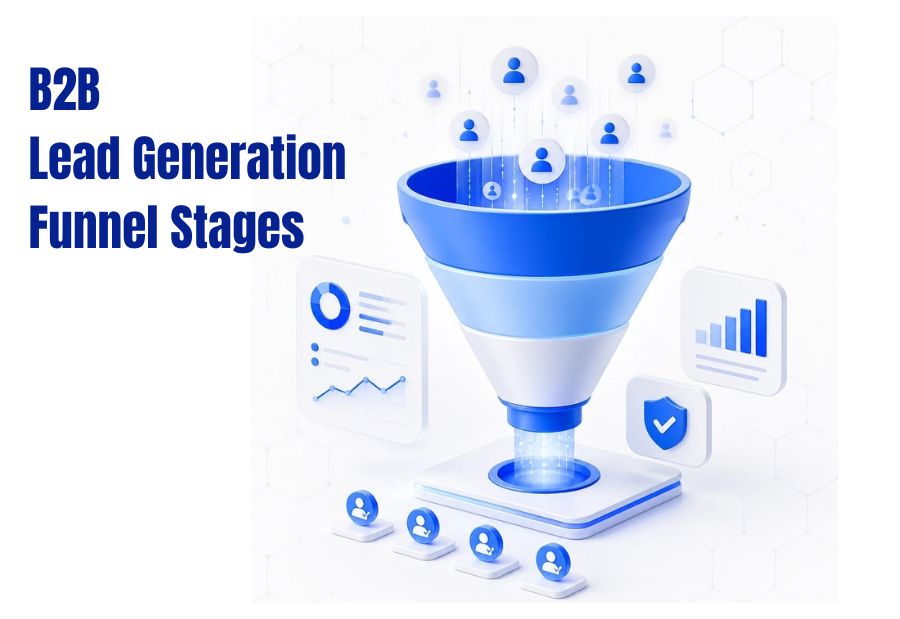
7 B2B Lead Generation Funnel Stages and How to Optimise Each One
B2B customers rarely make purchasing decisions after a single interaction. They usually research different solutions, compare providers, evaluate business requirements and consult multiple stakeholders before choosing a service or product. Understanding the B2B lead generation funnel stages helps businesses guide potential customers through this process and create more effective marketing campaigns. Platforms such as LinkedIn and HubSpot support this process through audience engagement, lead management and campaign tracking.
A structured lead generation funnel gives marketing and sales teams a clearer understanding of how prospects move from initial awareness to becoming customers.
What are B2B lead generation funnel stages?
A B2B lead generation funnel represents the stages a potential customer moves through before making a purchasing decision. It helps businesses organise marketing activities according to the prospect’s level of awareness, interest and buying readiness.
Unlike many consumer purchases, B2B buying journeys can involve longer decision-making periods, detailed research and several stakeholders.
The funnel can be divided into seven stages: awareness, interest, engagement, lead capture, lead qualification, consideration and conversion.
1. Awareness: Attract the right audience
The awareness stage is where potential customers first discover a business, product or service.
At this point, prospects may be researching a business problem without knowing which solution they need. The objective is to reach relevant audiences and introduce the business as a useful source of information.
Common awareness activities include:
- SEO-focused blogs and articles
- LinkedIn posts and industry updates
- Paid search and display advertising
- Industry events and webinars
- Educational reports and guides
How to optimise this stage:
Focus on topics that address the challenges faced by your target audience. Use relevant keywords, industry-specific content and targeted campaigns to attract visitors who are more likely to need your services.
2. Interest: Encourage further exploration
Once prospects become aware of a business, they may explore its website, services, resources and other content.
The objective at this stage is to provide useful information that helps visitors understand the available solutions.
Businesses can encourage further interest through:
- Service and solution pages
- Educational blog content
- Case studies
- Industry reports
- Product demonstrations
How to optimize this stage:
Create clear website navigation and connect related content through internal links. Make it easy for visitors to understand what the business offers and how its services address their challenges.
3. Engagement: Build trust and interaction
The engagement stage encourages prospects to interact with the business beyond basic website visits.
These interactions can indicate that a potential customer is actively exploring available solutions.
Examples include
- Registering for webinars
- Downloading research reports
- Subscribing to newsletters
- Attending virtual events
- Interacting with LinkedIn content
How to optimise this stage:
Offer resources that provide genuine value rather than asking visitors to submit their details for basic information. Use relevant calls to action and create opportunities for prospects to engage with your business.
4. Lead Capture: Convert visitors into leads
Lead capture occurs when a visitor shares contact information through a form, registration page, enquiry or another conversion action.
For B2B businesses, this may include downloading a whitepaper, requesting a product demonstration or enquiring about a service.
How to optimise this stage:
Make lead capture forms simple and relevant. Ask only for information that is necessary for the next step.
Useful practices include:
- Use clear and specific form headlines.
- Explain what visitors receive after submitting the form.
- Avoid unnecessary form fields.
- Provide clear privacy information.
- Ensure forms work properly on mobile devices.
A well-designed landing page can improve the likelihood of converting interested visitors into identifiable leads.
5. Lead Qualification: Identify suitable prospects
Not every captured lead is ready for a sales conversation. Lead qualification helps businesses identify prospects that match their target customer requirements and show meaningful buying interest.
Marketing and sales teams can evaluate leads using factors such as:
- Industry and company size
- Job role and decision-making authority
- Business requirements
- Engagement with marketing content
- Budget and purchasing timeline, where available
How to optimise this stage:
Define clear qualification criteria with the sales team. Use CRM information, lead forms and engagement data to prioritise relevant prospects. An Ideal Customer Profile can also help determine whether a lead belongs to a suitable target organisation.
6. Consideration: Help prospects evaluate solutions
At the consideration stage, prospects have a clearer understanding of their requirements and begin comparing potential providers.
They may evaluate service capabilities, pricing, implementation requirements, customer experience and expected business outcomes.
Useful marketing resources include:
- Detailed case studies
- Service comparison guides
- Customer testimonials
- Product demonstrations
- Technical documentation
- Consultation sessions
How to optimise this stage:
Provide information that addresses common objections and purchasing concerns. Personalise communication based on the prospect’s industry, requirements and previous interactions.
Marketing and sales teams should also coordinate their follow-ups to ensure prospects receive consistent information.
7. Conversion: Turn opportunities into customers
Conversion is the stage where a qualified prospect makes a purchasing decision and becomes a customer.
Depending on the business model, this may involve signing a contract, purchasing a product, approving a proposal or starting a service engagement.
How to optimise this stage:
Make the final decision process straightforward. Provide clear proposals, explain deliverables, address outstanding concerns and maintain timely communication.
Businesses should also review why opportunities are won or lost. This information can help improve future targeting, messaging and sales processes.
How to measure performance across the B2B lead generation funnel
Tracking performance at each stage helps businesses identify where prospects lose interest or fail to progress.
| Funnel Stage | Important Metrics |
| Awareness | Website traffic, reach, impressions |
| Interest | Engaged sessions, content views, returning visitors |
| Engagement | Webinar registrations, downloads, interactions |
| Lead Capture | Form submissions, landing page conversion rate |
| Lead Qualification | Qualified lead rate, sales acceptance rate |
| Consideration | Demo requests, proposal requests, opportunity progression |
| Conversion | Win rate, customer acquisition cost, revenue generated |
These metrics should be reviewed together rather than in isolation. For example, high website traffic with few qualified leads may indicate a mismatch between audience targeting and campaign content.
Mercadeo can support businesses with B2B lead generation, demand generation and integrated marketing campaigns that connect audience engagement with measurable business outcomes.
Final Thought
The seven B2B lead generation funnel stages provide a structured way to understand how potential customers discover, evaluate and purchase business solutions. Each stage requires relevant content, suitable communication and clear performance measurement.
By optimizing every stage, businesses can improve prospect engagement, identify suitable opportunities and create a more consistent journey from initial awareness to customer conversion.
About The Author
