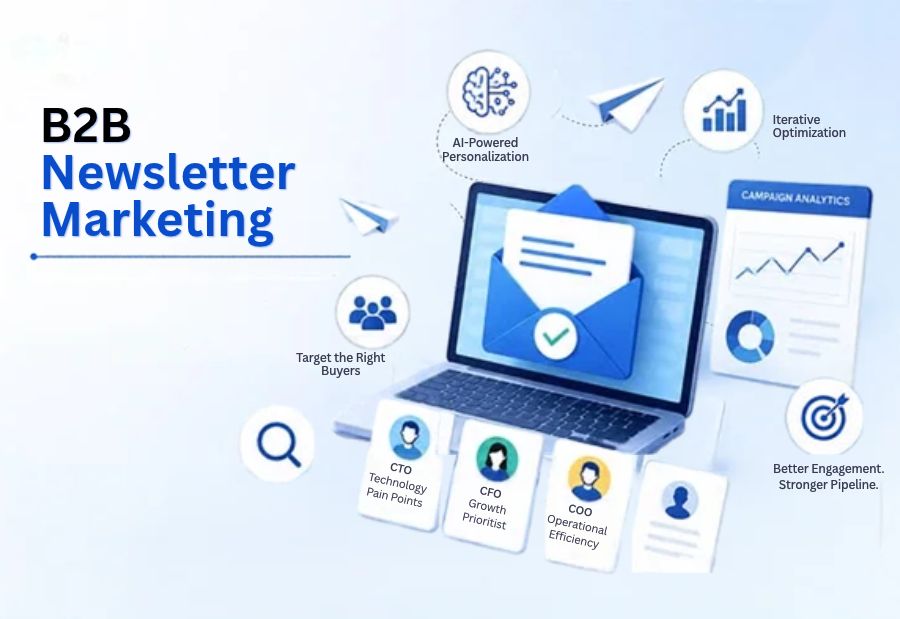
B2B Newsletter Marketing: Building Brand Visibility Through Industry Insights
B2B businesses need consistent communication to remain visible to potential customers and industry decision-makers. Email platforms such as HubSpot and Mailchimp help marketing teams distribute newsletters, share relevant updates and maintain communication with subscribers. However, an effective newsletter should offer more than company announcements or promotional messages. B2B newsletter marketing focuses on delivering useful industry insights, business updates and educational content that encourages audiences to stay connected with a brand.
For companies operating in competitive markets, newsletters can become a regular communication channel that supports brand awareness, audience engagement and long-term relationship building. Mercadeo helps businesses strengthen their B2B marketing activities through integrated strategies that connect content, audience engagement and lead generation.
What is B2B Newsletter Marketing?
B2B newsletter marketing is a communication strategy in which businesses regularly send curated emails to subscribers, including prospects, existing customers, business partners and industry professionals.
These newsletters may include industry developments, expert opinions, research findings, company updates, educational resources and links to relevant articles. Their purpose is to provide information that helps readers understand business challenges, explore new developments and make informed decisions.
Unlike direct promotional emails that primarily encourage immediate action, newsletters focus on building familiarity and maintaining meaningful communication over time.
Why Are Industry Insights Important in B2B Newsletters?
B2B buyers often research market developments, compare solutions and evaluate industry expertise before making purchasing decisions. Sharing relevant insights helps businesses become a useful source of information during this process.
Some important benefits include:
- Building Brand Visibility
Regular newsletters keep a business visible in subscribers’ inboxes. Consistently sharing useful information helps audiences recognise the brand and become familiar with its areas of expertise.
- Establishing Industry Credibility
Businesses can demonstrate their understanding of industry challenges through expert commentary, research summaries, market observations and practical recommendations. This can strengthen their reputation as knowledgeable industry participants.
- Maintaining Prospect Engagement
B2B purchasing decisions can involve several stakeholders and extended evaluation periods. Newsletters provide opportunities to maintain communication with prospects even when they are not immediately ready to engage with the sales team.
- Driving Website Traffic
Newsletters can direct subscribers to blogs, reports, webinars, case studies and service pages. Including relevant links gives readers opportunities to explore additional information on the company’s website.
- Supporting Customer Relationships
Existing customers can receive product updates, industry developments, educational resources and useful recommendations. This helps businesses maintain communication beyond the initial purchase.
What Content Should a B2B Newsletter Include?
A successful newsletter needs a clear editorial direction. Rather than filling emails with unrelated updates, marketing teams should select content based on subscriber interests and business requirements.
Common content formats include:
- Industry news and developments: Share important changes, technology updates, market trends and regulatory developments relevant to the target audience.
- Expert insights: Include perspectives from company leaders, subject matter experts or industry professionals.
- Educational articles: Highlight blogs, practical guides and explainers that address common business challenges.
- Research and reports: Share original research, industry surveys, market reports and useful data points.
- Webinars and events: Inform subscribers about upcoming discussions, online sessions and industry events.
- Company updates: Communicate relevant business developments, new services, partnerships and milestones without making the newsletter overly promotional.
Combining these formats helps create a balanced newsletter that provides information while maintaining brand relevance.
How to Build an Effective B2B Newsletter Marketing Strategy
A structured approach helps businesses develop newsletters that match audience expectations and marketing objectives.
- Define the Target Audience
Identify who will receive the newsletter. Subscribers may include senior executives, marketing professionals, IT leaders, procurement teams or existing customers. Understanding their responsibilities and interests helps determine relevant content.
- Establish Clear Content Themes
Select a few recurring themes based on the company’s industry and audience requirements. For example, a technology-focused business may cover AI developments, cybersecurity, digital transformation and enterprise technology.
- Create a Consistent Publishing Schedule
Choose a realistic frequency, such as weekly, fortnightly or monthly. Consistency helps audiences understand when to expect updates. The ideal schedule depends on content availability and subscriber preferences.
- Write Relevant Subject Lines
Subject lines should clearly communicate the newsletter’s value. Avoid misleading statements or excessive promotional language. A specific subject line helps readers understand why the email may be useful.
- Segment the Subscriber List
Not every subscriber needs the same information. Segment audiences according to industry, role, interests, customer status or engagement history. This makes it easier to deliver more relevant content.
- Use Clear Calls to Action
Include appropriate actions such as reading an article, exploring a report, registering for a webinar or contacting the business. Avoid adding too many competing calls to action in one newsletter.
Measuring B2B Newsletter Performance
Tracking performance helps marketing teams understand whether newsletters are reaching the right audience and encouraging meaningful engagement.
Important metrics include:
- Delivery rate: Percentage of sent emails successfully delivered.
- Click-through rate: Percentage of delivered emails that generate clicks on links.
- Click-to-open rate: Percentage of unique email openers who click a link, where reliable open data is available.
- Unsubscribe rate: Percentage of recipients who opt out of future communication.
- Conversion rate: Percentage of recipients who complete a desired action, such as registering for an event or submitting an enquiry.
- Website engagement: Visits, content consumption and other relevant activity generated through newsletter links.
Email open rates should be interpreted carefully because privacy features and automated email activity can affect their accuracy. Clicks, conversions and subsequent website engagement often provide more useful evidence of audience interest.
Common B2B Newsletter Marketing Mistakes to Avoid
Businesses should avoid sending newsletters without a defined audience, repeating promotional messages, publishing inconsistent content or using misleading subject lines. Poor subscriber segmentation and excessive email frequency can also reduce engagement.
Another common mistake is focusing only on email delivery and open rates without evaluating whether the content generates meaningful interactions. Newsletter performance should be connected with broader marketing objectives.
Final Thought
B2B newsletter marketing is most effective when businesses prioritise useful information over repeated promotion. Industry insights, expert perspectives, educational resources and relevant business updates can help organisations maintain visibility and build stronger relationships with their audiences.
A consistent content strategy, relevant subscriber segmentation and meaningful performance measurement can turn newsletters into a valuable part of the B2B marketing mix. Mercadeo supports businesses in developing integrated marketing strategies that connect content distribution, audience engagement and lead generation with broader business goals.
About The Author
