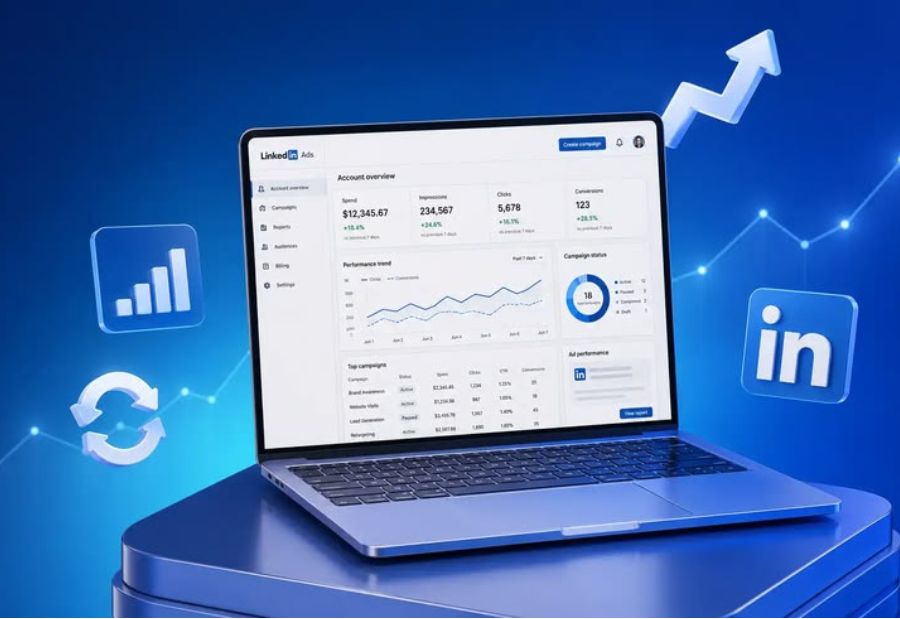
6 Ways to Improve Lead Quality From LinkedIn Lead Generation Forms
LinkedIn is an important channel for B2B businesses looking to connect with professionals, decision-makers and potential customers. Its Lead Gen Forms make it easier to collect prospect information directly through advertisements without requiring users to visit an external landing page. Platforms such as LinkedIn and marketing solutions like HubSpot help businesses manage professional audience engagement and lead generation activities. However, a high number of form submissions does not always translate into valuable business opportunities.
Some campaigns generate enquiries from people who are not part of the target audience, do not have purchasing authority or are not actively looking for a solution. This makes LinkedIn Lead Gen Forms an important area to optimise when the goal is to generate qualified B2B leads rather than simply increase submission volume.
Here are six practical ways to improve lead quality from LinkedIn Lead Gen Forms.
1. Define Your Target Audience Before Launching Campaigns
Lead quality begins with audience selection. Even a well-designed form may generate irrelevant enquiries if advertisements reach professionals who are not suitable for your products or services.
Before launching a campaign, define the characteristics of your ideal prospects. Consider factors such as:
- Job title and seniority: Target professionals who influence or make purchasing decisions.
- Industry: Focus on industries that are relevant to your offerings.
- Company size: Select businesses that match your service capacity and target market.
- Job function: Reach departments that are likely to need your solution.
- Geography: Select locations where your business can serve customers.
For example, a B2B marketing services provider may focus on marketing heads, demand generation managers and business development leaders at technology companies.
A clearly defined audience reduces irrelevant reach and gives campaigns a stronger foundation for generating suitable prospects.
2. Use Form Questions That Help Qualify Prospects
LinkedIn Lead Gen Forms can automatically populate certain details from a member’s profile, making submissions convenient. However, pre-filled contact information does not necessarily reveal whether someone is a potential customer.
Adding relevant qualifying questions can help businesses understand a prospect’s requirements before passing the lead to the sales team.
Depending on your offering, consider asking:
- What service are you interested in?
- What is your company size?
- What is your primary business challenge?
- When are you planning to implement a solution?
For example, a company offering B2B lead generation services could ask prospects whether they need lead generation, appointment setting or demand generation support.
However, avoid adding too many questions. Long forms can discourage submissions. LinkedIn recommends keeping forms to around three to four fields as a best practice, although the right balance depends on campaign objectives and audience expectations.
3. Use Specific Ad Messaging and Relevant Offers
The advertisement and the Lead Gen Form should communicate the same offer. If an advertisement promises a detailed B2B marketing guide, the form should clearly explain how users will receive that guide.
Generic offers may attract people who are interested in the content but have no immediate need for the advertised service.
Instead, make the offer specific to the intended audience.
For example:
- Instead of “Download Our Marketing Guide”, use “Download the B2B Demand Generation Planning Guide”.
- Instead of “Learn More About Our Services”, use “Explore B2B Lead Generation Solutions for Technology Companies”.
Specific messaging helps prospects understand what they are signing up for and gives businesses a better opportunity to attract relevant enquiries.
4. Validate Business Contact Information
Accurate contact information is essential for effective sales follow-up. If a campaign collects incorrect email addresses or incomplete business details, sales teams may struggle to connect with prospects.
Where appropriate, use LinkedIn’s work email field and its work email validation option to help reduce submissions from commonly used free email domains.
Businesses can also review:
- Company names and website domains.
- Job titles and professional roles.
- Business email addresses.
- Company size and industry details.
- Duplicate or incomplete records.
Keep in mind that email validation does not guarantee that a lead is genuinely interested or qualified. It is one part of a wider lead verification process.
5. Connect LinkedIn Leads With Your CRM and Sales Process
Collecting leads is only the beginning. Businesses need a reliable process for transferring information from LinkedIn Campaign Manager to their CRM or marketing automation platform.
When lead data is transferred promptly, sales teams can review enquiries, assign ownership and begin follow-up without unnecessary delays.
A structured process should include:
- Capturing submitted lead information.
- Checking for duplicate records.
- Assigning leads to the appropriate sales representative.
- Recording the campaign and advertisement source.
- Updating lead status after qualification.
- Tracking whether the lead becomes an opportunity or customer.
Mercadeo’s B2B marketing approach connects lead generation activities with sales-focused outcomes. A properly managed CRM process helps businesses understand which campaigns contribute to meaningful sales opportunities.
6. Measure Lead Quality Instead of Only Tracking Cost Per Lead
A campaign that generates inexpensive leads is not necessarily a successful campaign. Businesses should evaluate whether those leads match their target audience and progress through the sales pipeline.
Along with cost per lead, track the following metrics:
- Lead-to-MQL rate: Percentage of leads that become marketing qualified.
- MQL-to-SQL rate: Percentage of marketing qualified leads accepted by sales.
- Cost per qualified lead: Marketing expenditure divided by qualified leads generated.
- Lead-to-opportunity rate: Percentage of leads that become sales opportunities.
- Customer conversion rate: Percentage of leads that eventually become customers.
Compare these metrics across audiences, advertisements and offers. If one campaign produces many submissions but very few qualified leads, review its targeting, messaging and form questions.
Final Thought
LinkedIn Lead Gen Forms can simplify B2B lead collection, but successful campaigns require more than increasing form submissions. Businesses need to reach the right professionals, communicate relevant offers, collect useful information and establish a consistent follow-up process.
By improving audience targeting, qualifying prospects and measuring lead quality, businesses can make better use of their LinkedIn advertising budgets. Mercadeo can help organisations connect their B2B digital marketing and lead generation activities with measurable business objectives.
About The Author
