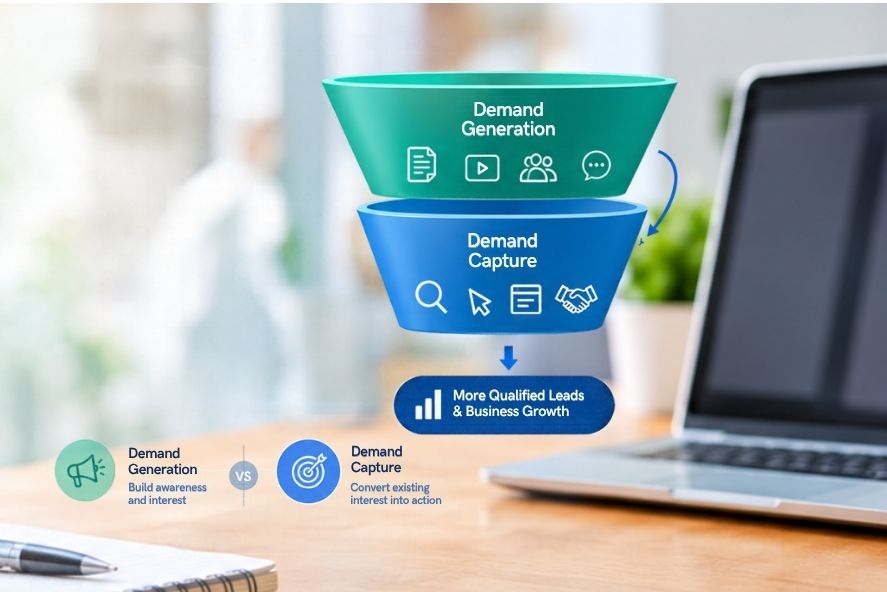
What is Demand Capture and How is it different from demand generation?
B2B marketing requires more than attracting attention; it also needs to turn existing buyer interest into business opportunities. While companies such as HubSpot and Microsoft use different approaches to reach and engage business audiences, understanding demand capture vs demand generation helps marketers plan campaigns more effectively. Mercadeo helps businesses connect marketing activities with lead quality and sales outcomes.
What is Demand Generation?
Demand generation is the process of building awareness and interest in a company’s products or services. It helps potential buyers understand a problem, explore possible solutions and become familiar with a brand before they are ready to purchase.
Demand generation activities often include:
- Publishing educational blogs and industry reports.
- Sharing insights through social media and webinars.
- Running awareness campaigns across relevant channels.
- Using email newsletters to educate potential customers.
- Promoting research, guides and other useful resources.
For example, a B2B software company may publish a guide on improving customer data management. A reader who discovers the guide may not be planning to buy software immediately, but the content can help the company build awareness and trust.
The main goal of demand generation is to create interest and build relationships with potential buyers over time.
What is Demand Capture?
Demand capture focuses on reaching buyers who are already showing interest in a product, service, or solution. These prospects may be actively researching vendors, comparing options, or looking for a solution to a business problem.
Common demand capture activities include:
- Running paid search campaigns for high-intent keywords.
- Optimising product and service pages for relevant searches.
- Creating comparison pages and solution-specific landing pages.
- Retargeting visitors who have shown interest in an offering.
- Providing clear ways to request a demo, consultation, or proposal.
For example, someone searching for a “B2B lead generation services company” may already be evaluating potential providers. A relevant landing page with clear service information and a consultation option can help turn that interest into an enquiry.
Demand capture aims to convert existing buying interest into measurable actions, such as enquiries, demo requests, or sales conversations.
Demand Capture vs Demand Generation: Key Differences
Although both approaches support business growth, they serve different purposes in the buyer journey.
- Primary objective
Demand generation builds awareness and interest among potential buyers. Demand capture converts existing interest into action.
- Target audience
Demand generation often reaches audiences who may not be actively searching for a solution. Demand capture focuses more on prospects demonstrating purchase intent.
- Marketing channels
Demand generation commonly uses educational content, webinars, organic social media and awareness campaigns. Demand capture often relies on high-intent search campaigns, service pages, retargeting and conversion-focused landing pages.
- Performance measurement
Demand generation can be measured through relevant audience reach, content engagement, returning visitors and growth in qualified interest. Demand capture can be measured through qualified enquiries, demo requests, conversion rates and opportunities generated.
- Time to impact
Demand capture may produce enquiries sooner when buyer intent is already strong. Demand generation often takes longer because trust and awareness develop over time. However, results depend on the audience, offer, channel and sales cycle.
How can businesses use both strategies together?
Businesses do not need to choose one approach over the other. Combining demand generation and demand capture can help create a more consistent marketing pipeline.
Here are four practical steps:
Build awareness with useful content. Publish articles, reports and webinars that address the challenges your target audience faces.
Identify signs of buying intent. Review relevant website visits, search queries, content interactions and enquiries to understand what prospects need.
Create conversion-focused pages. Make service pages clear, explain business benefits and provide suitable next steps for interested visitors.
Connect marketing and sales data. Track how prospects move from initial engagement to qualified leads and revenue. This helps teams identify which activities contribute to pipeline growth.
Mercadeo can use this combined approach to align content, lead generation and campaign planning with the needs of B2B buyers.
Common mistakes to avoid
A common mistake is expecting demand generation to produce immediate sales enquiries. Educational campaigns may influence buying decisions long before a prospect contacts the company.
Another mistake is investing in demand capture without building enough awareness. High-intent campaigns can struggle when prospects do not recognise the brand or trust the offering.
Businesses should also avoid measuring every campaign using the same metrics. Awareness campaigns and conversion campaigns have different objectives, so performance should be evaluated accordingly.
Final Thought
Understanding demand capture vs demand generation helps B2B marketers make better decisions about campaign goals, budgets and performance measurement. Demand generation creates interest, while demand capture helps convert existing interest into business opportunities.
For sustainable growth, businesses should connect both strategies with relevant content, clear conversion paths and consistent sales follow-up. Mercadeo can help businesses build a more connected marketing approach that supports qualified leads and long-term revenue growth.
About The Author
