How to Build a Multi-Touch Engagement Strategy for Long B2B Sales Cycles
B2B purchasing decisions rarely happen after a single interaction. Businesses often evaluate several providers, compare solutions, consult internal stakeholders and assess budgets before making a purchase. This process can extend across weeks or months, making consistent communication important throughout the buyer journey. Platforms such as LinkedIn help businesses connect with professional audiences, while tools such as HubSpot support marketing communication and lead management. A well-planned multi-touch engagement strategy helps businesses maintain meaningful interactions with potential customers at different stages of this process.
For marketing teams, the challenge is not simply reaching prospects repeatedly. It is delivering relevant information through the right channels at the right time. Mercadeo helps businesses approach B2B marketing through coordinated campaigns that support prospect engagement and lead generation.
What Is a Multi-Touch Engagement Strategy?
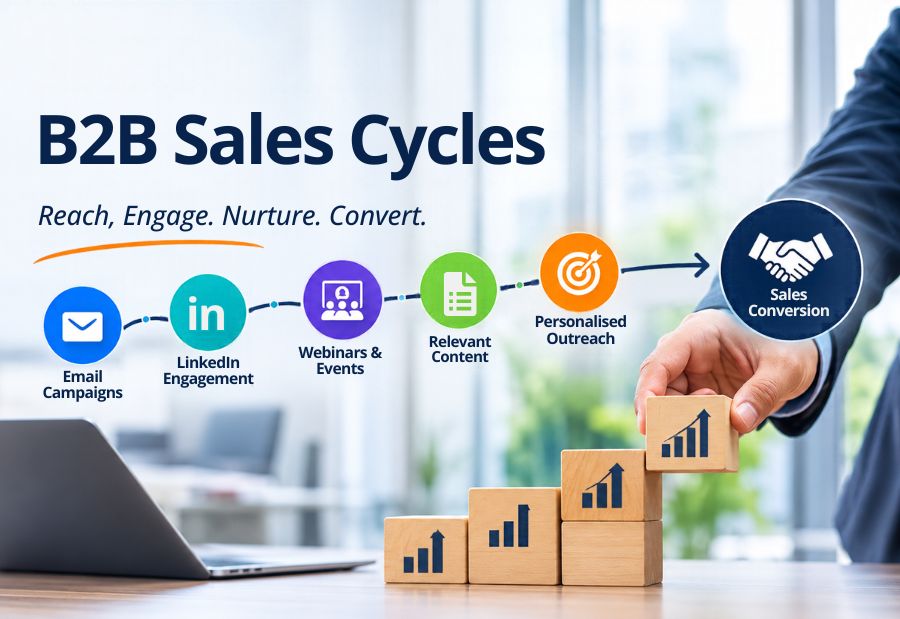
A multi-touch engagement strategy is a planned approach to interacting with potential customers through multiple marketing and communication touchpoints. These interactions may include emails, website visits, webinars, social media, paid advertisements, content downloads, sales calls and personalised follow-ups.
Each interaction serves a purpose. An introductory article may help a prospect understand a business challenge, while a webinar can explain possible solutions. A case study can provide evidence of results and a sales discussion can address specific requirements.
The objective is to build familiarity, provide useful information and support the prospect’s decision-making process rather than relying on one campaign or communication channel.
Why Long B2B Sales Cycles Need Multiple Touchpoints
Long B2B sales cycles involve more research and evaluation than many individual consumer purchases. A purchasing decision may include marketing managers, technology leaders, finance teams, procurement professionals and senior management.
Each stakeholder may have different concerns. One may focus on technical capabilities, another on implementation costs, while a decision-maker may evaluate long-term business value.
A multi-touch approach helps businesses:
- Maintain communication with prospects over extended decision periods.
- Provide relevant information to different stakeholders.
- Build trust through consistent and useful interactions.
- Identify engagement signals that indicate buying interest.
- Reduce the risk of prospects losing interest during the evaluation process.
Without a coordinated approach, businesses may communicate too frequently, send unrelated messages or lose contact with potential customers.
6 Steps to Build an Effective Multi-Touch Engagement Strategy
1. Understand the B2B Buyer Journey
Start by identifying the stages prospects move through before making a purchase. These commonly include awareness, consideration, evaluation and decision.
At the awareness stage, prospects may be researching a business problem. During consideration, they compare possible approaches. In the evaluation stage, they may request demonstrations, pricing information or case studies.
Map the questions prospects are likely to ask at each stage. This helps marketing teams select suitable content and communication methods instead of sending the same message throughout the sales cycle.
2. Identify Key Decision-Makers
B2B purchasing decisions often involve a group of stakeholders rather than one individual. Marketing teams should understand who influences the purchase and what information each person needs.
For example, a technology leader may want technical documentation, while a finance manager may need pricing details and return-on-investment information.
Account-based marketing can help businesses organise engagement around selected companies and relevant decision-makers. This makes communication more specific and useful.
3. Select the Right Engagement Channels
A multi-touch engagement strategy should combine channels that support different types of interactions.
Useful channels include:
- Email marketing: Share educational content, updates and personalised follow-ups.
- LinkedIn: Connect with professional audiences and distribute relevant industry information.
- Webinars: Explain complex subjects and engage prospects through discussions.
- Paid advertising: Maintain visibility among relevant audiences.
- Website content: Provide detailed information through blogs, service pages and case studies.
- Sales outreach: Address individual questions and discuss specific business requirements.
The objective is not to use every available channel. It is to choose the channels that match the audience’s preferences and the campaign’s goals.
4. Create Content for Every Stage
Different stages of the buying journey require different types of content.
Awareness-stage prospects may benefit from industry reports, educational blogs and practical guides. Consideration-stage prospects may respond to webinars, comparison articles and solution explainers. Evaluation-stage prospects may need case studies, product demonstrations and detailed proposals.
Mercadeo’s integrated marketing approach can help businesses coordinate content, digital campaigns and lead generation activities so that prospects receive relevant information throughout their journey.
5. Plan Follow-Ups Based on Engagement
Follow-ups should reflect how prospects interact with previous communications. Someone who downloads a detailed guide may be interested in receiving related information, while someone who attends a webinar may benefit from a follow-up discussion.
Marketing automation tools can help schedule communications, organise prospect information and trigger follow-ups based on selected actions.
However, automation should not replace relevance. Repeated messages without considering a prospect’s interests can create communication fatigue. Teams should also provide clear ways for recipients to manage their email preferences.
6. Measure Engagement and Improve Campaigns
Track how prospects respond to different touchpoints. Useful measures include email engagement, webinar attendance, content downloads, website activity, meeting requests, qualified opportunities and progression through the sales pipeline.
Multi-touch attribution can help teams understand how different interactions contribute to conversions. However, attribution models provide different views of campaign influence and should not be treated as a complete explanation of why a purchase happened.
Review campaign performance regularly and adjust channel selection, content and follow-up timing based on actual engagement.
Common Mistakes to Avoid
Even a well-planned strategy can become ineffective when marketing teams focus only on the number of interactions. Common mistakes include sending repetitive messages, ignoring stakeholder differences, using disconnected communication channels and failing to coordinate marketing with sales.
Another issue is measuring every touchpoint independently without understanding how interactions work together. A prospect may engage with several pieces of content before becoming ready for a sales conversation. Evaluating the complete journey provides better context.
Final Thought
Long B2B sales cycles require more than occasional emails or advertising campaigns. Businesses need a structured approach that combines relevant content, consistent communication and meaningful follow-ups across multiple channels.
A well-executed multi-touch engagement strategy helps marketing teams build stronger relationships with prospects while supporting the sales process. With coordinated campaigns, audience insights and regular performance reviews, businesses can make each interaction more useful. Mercadeo’s integrated marketing services support this approach by bringing together lead generation, digital marketing and strategic campaign execution.
About The Author
