Lead Generation vs. Demand Generation: How Should B2B Businesses Balance Both?
B2B businesses need to attract potential customers and create opportunities for sales teams. However, generating enquiries does not always mean that a market is ready to purchase. Some prospects may already be evaluating solutions, while others are still learning about a problem or exploring available options. Platforms such as LinkedIn help businesses build awareness among professional audiences, while tools such as HubSpot support lead capture and marketing campaign management. This is where understanding lead generation vs. demand generation becomes important.
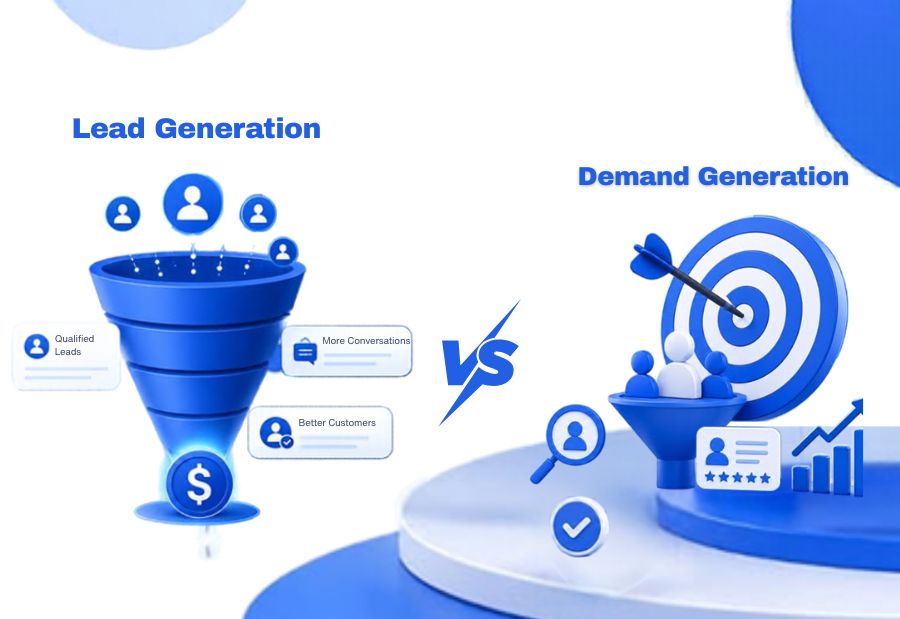
Both approaches contribute to business growth, but they serve different purposes. Lead generation focuses on identifying and capturing potential buyers, while demand generation builds awareness and interest in a business’s products or services. Mercadeo’s integrated marketing approach brings these activities together to support a more connected B2B marketing strategy.
What is Lead Generation?
Lead generation is the process of attracting potential customers and collecting their contact information so that businesses can engage with them further.
Common lead generation activities include:
- Downloadable guides, reports and whitepapers.
- Website enquiry and contact forms.
- LinkedIn advertising and lead generation campaigns.
- Webinar registrations.
- Email campaigns and targeted landing pages.
- Industry events and business networking activities.
For example, a company offering cloud consulting services may run a campaign promoting a technical assessment. Interested visitors can submit their business details through a form to request further information.
The marketing team can then evaluate these enquiries, identify relevant prospects and share qualified opportunities with the sales team.
The main objective is to generate leads that match the business’s target audience and have potential commercial value.
What is Demand Generation?
Demand generation is a broader marketing approach focused on creating awareness, educating potential customers and building interest in a company’s solutions.
It helps businesses reach audiences that may not yet be actively searching for a particular product or service.
Demand generation activities can include:
- Educational blogs and industry reports.
- Thought leadership and expert commentary.
- Organic social media campaigns.
- Webinars and online discussions.
- Podcasts and video content.
- Brand awareness and paid advertising campaigns.
- Industry research and content distribution.
For example, a B2B marketing company may publish educational content explaining the challenges of reaching decision-makers in complex sales environments. Even if readers do not immediately enquire about its services, the content can introduce the company to a relevant audience and build familiarity over time.
Demand generation therefore focuses on developing market interest rather than collecting contact details from every interaction.
Lead Generation vs. Demand Generation: Key Differences
Although both approaches support B2B growth, their objectives and measurement methods differ.
| Comparison area | Lead generation | Demand generation |
| Main objective | Capture potential customer information | Build awareness and interest |
| Primary focus | Enquiries and prospects | Audience education and market engagement |
| Typical activities | Forms, gated content, registrations | Blogs, webinars, social media, thought leadership |
| Audience stage | Often prospects showing identifiable interest | Prospects across awareness and consideration |
| Key measurements | Leads, qualified leads, conversion rate | Reach, engagement, branded interest, content consumption |
| Business contribution | Creates opportunities for follow-up | Develops interest and supports future demand |
Neither approach should operate independently. Demand generation helps build an interested audience, while lead generation provides ways to identify and engage prospects who are willing to share their information.
How Should B2B Businesses Balance Both?
1. Build Awareness Before Asking for Enquiries
Not every potential buyer is ready to complete a contact form or speak with a sales representative. Businesses should first provide useful information that helps audiences understand their challenges.
Educational articles, industry insights and webinars can introduce a company to relevant prospects. Once interest develops, more specific content and enquiry opportunities can encourage further engagement.
2. Create Lead Capture Opportunities at the Right Stage
Lead generation activities should be connected to the level of interest shown by the audience.
For example, a visitor reading an introductory article may not be ready for a sales consultation. However, someone exploring service comparisons or requesting a detailed guide may be more willing to share contact information.
Use relevant landing pages, forms and calls to action that match the information being offered.
3. Align Content With the Buying Journey
Different audiences require different information depending on their level of awareness.
Demand generation content can explain industry challenges and introduce possible solutions. Lead generation content can offer more specific resources, consultations or assessments.
This creates a connected journey instead of treating every marketing interaction as an immediate opportunity to collect a lead.
4. Use Multiple Channels Together
A balanced B2B marketing strategy combines different channels to reach prospects at various stages.
For example, a business can publish an educational blog, promote it through LinkedIn, distribute related insights through email and use targeted advertising to reach relevant audiences.
Mercadeo’s integrated marketing services can support this coordination through digital campaigns, content marketing, lead generation and strategic audience engagement.
5. Connect Marketing and Sales Teams
Marketing and sales teams should agree on what makes a lead relevant and when it is ready for follow-up.
Marketing can share information about campaign engagement, content interests and enquiry sources. Sales teams can provide feedback on lead quality, buying requirements and common objections.
This feedback helps marketers improve audience targeting and campaign messaging.
6. Measure Both Short-Term and Long-Term Results
Lead generation and demand generation require different performance measures.
Lead generation can be evaluated through qualified leads, conversion rates, cost per lead and sales opportunities. Demand generation can be assessed through audience reach, website engagement, branded searches, content consumption and changes in market interest.
Businesses should review both sets of indicators to understand how marketing activities contribute to immediate opportunities and longer-term growth.
Common Mistakes B2B Businesses Should Avoid
One common mistake is prioritising lead volume without checking whether the enquiries match the target audience. Another is investing in awareness campaigns without providing clear next steps for interested prospects.
Businesses may also expect demand generation activities to produce immediate sales results. Building awareness and trust takes time, particularly when purchasing decisions involve multiple stakeholders.
A balanced strategy requires realistic expectations, consistent communication and regular performance reviews.
Final Thought
Lead generation and demand generation are complementary parts of a successful B2B marketing strategy. Demand generation helps businesses build awareness and develop interest, while lead generation turns identifiable interest into opportunities for further engagement.
Rather than choosing one approach over the other, businesses should connect both through relevant content, coordinated campaigns and clear marketing-to-sales processes. Mercadeo helps businesses bring these activities together through integrated marketing and B2B lead generation services, supporting both audience development and pipeline growth.
About The Author
