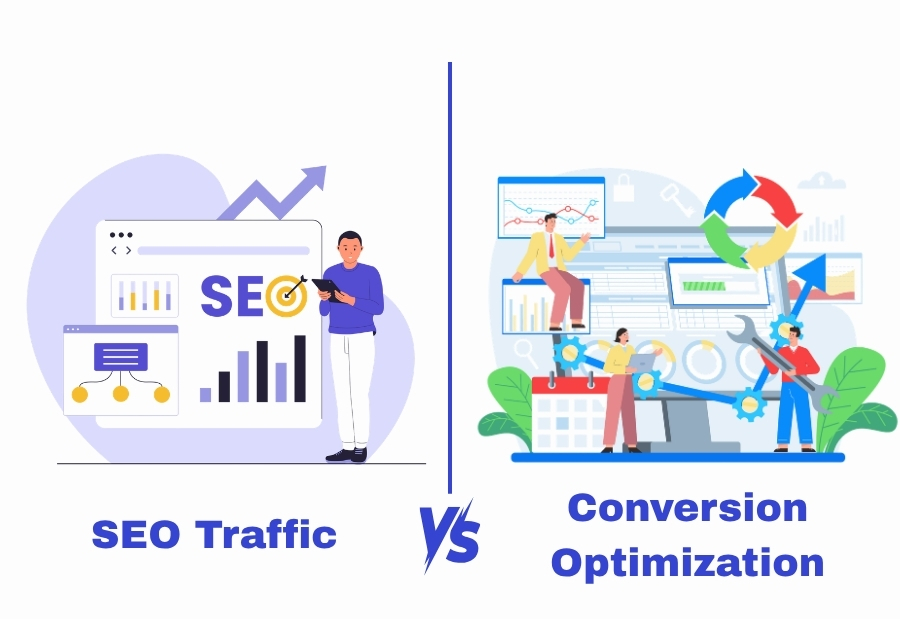
SEO Traffic vs Conversion Optimization — Which Should Startups Prioritize First?
For startups, every marketing investment needs to deliver measurable results. While attracting more website visitors is important, converting those visitors into qualified leads is equally critical. Companies like HubSpot and Shopify have demonstrated that sustainable growth comes from balancing search visibility with a seamless user experience that encourages action. Instead of treating SEO traffic and conversion optimization as separate strategies, startups should understand how both work together to support long-term business growth.
Understanding the difference
SEO focuses on increasing your website’s visibility in search engines. It helps potential customers discover your business through relevant searches and brings qualified visitors to your website.
Conversion optimization, often called CRO (Conversion Rate Optimization), focuses on improving the experience once visitors arrive. It encourages them to complete meaningful actions such as requesting a demo, filling out a contact form, downloading a guide, or registering for a webinar.
Both strategies are valuable, but their impact depends on the stage of your business.
Start with a website that can convert
Driving traffic to a poorly optimized website often leads to missed opportunities.
Before investing heavily in SEO, startups should ensure their website clearly explains their services, answers customer questions and includes strong calls to action. Visitors should quickly understand what the business offers and what they should do next.
A simple website with clear messaging can often generate better results than a high-traffic website with a confusing user experience.
Build SEO for sustainable growth
Once your website is ready to convert visitors, SEO becomes a powerful long-term growth strategy.
Publishing helpful blogs, optimizing service pages and targeting relevant keywords helps startups attract potential customers who are actively searching for solutions.
Unlike paid advertising, SEO continues generating traffic over time, making it an important investment for businesses looking to grow steadily.
Focus on user experience
Search rankings alone do not guarantee business growth.
Fast-loading pages, mobile-friendly design, clear navigation and relevant content all contribute to a positive user experience. These improvements not only help visitors stay engaged but also increase the likelihood of generating qualified enquiries.
A better user experience supports both SEO performance and conversion rates.
Combine SEO with conversion optimization
The strongest results come when SEO and conversion optimization work together.
For example, a blog may attract visitors through search engines, while an optimized landing page encourages them to download a guide or request a consultation. Internal links, relevant calls to action and helpful resources guide visitors naturally through the buying journey.
Instead of choosing one strategy over the other, businesses should create a connected experience from search to conversion.
Measure the right metrics
Startups should avoid focusing only on website traffic.
Review metrics such as qualified leads, contact form submissions, landing page performance, time on site and conversion rates alongside organic traffic. These insights provide a clearer understanding of how marketing activities contribute to business growth.
Tracking both visibility and conversions helps businesses make better marketing decisions.
Industry Trend: Quality is replacing volume
Many startups are shifting away from measuring success only by visitor numbers. Instead, they are focusing on attracting the right audience and creating websites that encourage meaningful engagement.
This customer-first approach helps businesses generate higher-quality leads while making better use of their marketing investment.
So, which should startups prioritize?
Rather than choosing between SEO traffic and conversion optimization, startups should focus on building a website that converts before scaling traffic. Once the website provides a strong user experience, SEO becomes much more effective because the additional visitors are more likely to become qualified leads.
Businesses that balance both strategies create a stronger foundation for sustainable growth.
Conclusion
SEO traffic and conversion optimization are not competing strategies—they are complementary. One brings potential customers to your website, while the other helps turn their interest into business opportunities. At Mercadeo, we help startups and enterprise businesses combine SEO, content marketing, demand generation and conversion-focused digital strategies to attract qualified visitors, improve engagement and generate long-term business growth.
About The Author
