AI Visibility Tracking: Metrics and Tools Marketers Should Know
People are increasingly using AI-powered search experiences to discover brands, compare products, and find answers. For marketers, this creates a need to understand how their businesses appear in AI-generated responses alongside traditional search results. AI visibility tracking helps teams monitor brand mentions, citations, and presence across selected AI search experiences. Platforms such as Semrush and Google Search Console can support broader search analysis, while dedicated AI visibility tools provide additional insights. Mercadeo can use these findings to connect search visibility with content and marketing priorities.
What is AI Visibility Tracking?
AI visibility tracking is the process of monitoring whether and how a brand appears in AI-generated answers, summaries, and search experiences.
Depending on the platform, this may include brand mentions, cited website pages, competitor comparisons, and the questions for which a company appears. Results can vary by query, location, language, platform, and time.
AI visibility is not the same as traditional search rankings. A website might rank well in standard search results but receive few citations in AI answers. Similarly, a brand may be mentioned in an AI response without receiving a website visit.
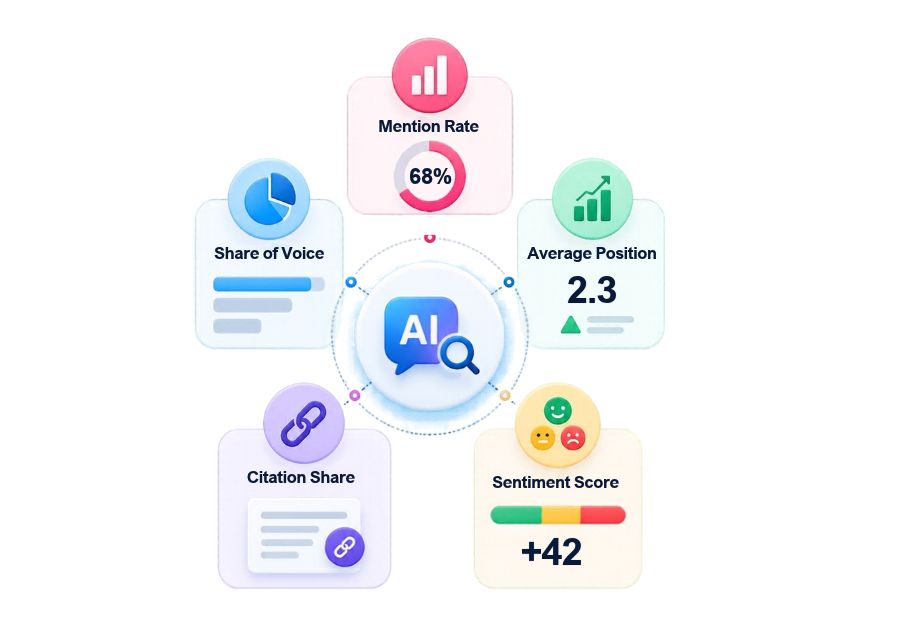
6 Important Metrics for AI Visibility Tracking
1. Brand Mention Frequency
This metric measures how often a brand appears in responses to a defined set of prompts or questions.
Track mentions across relevant topics and compare results over time. A rise in mentions may indicate greater visibility, but teams should also review whether the references are accurate and relevant.
2. Citation Frequency
Citation frequency tracks how often an AI platform references or links to a brand’s website or content.
It helps marketers identify which pages contribute to AI-generated answers. Review cited URLs to understand whether product pages, research reports, service pages, or educational articles attract references.
3. Share of Voice
AI share of voice compares a brand’s visibility with that of selected competitors across a consistent set of prompts.
For example, a B2B marketing company could monitor responses to questions about lead generation services and compare how often it appears against other providers. The result depends on the prompts, platforms, and measurement method used.
4. Sentiment and Context
A brand mention alone does not reveal whether an AI response presents the business positively, negatively, or neutrally.
Review the context of each mention. Check for inaccurate descriptions, outdated information, unsupported claims, or missing details about the company’s products and services.
Automated sentiment scores can help organise large datasets, but human review remains important.
5. Prompt Coverage
Prompt coverage measures how many relevant questions or topics produce a brand mention or citation.
Build a list of questions that reflect customer needs at different stages, from learning about a problem to comparing providers. This helps teams identify topics where their brand is visible and areas where useful content may be missing.
6. Referral Traffic and Conversions
Referral traffic and conversions help connect AI visibility with website outcomes.
Use available analytics and referral data to identify visits from AI platforms. Where possible, measure engagement, enquiries, downloads, and other meaningful conversions.
However, not every AI-generated mention leads to a click. Track visibility and website outcomes separately instead of assuming that more mentions automatically generate more leads.
AI Visibility Tracking Tools Marketers Can Explore
Different tools support different parts of the measurement process.
| Tool | Potential use |
| Semrush | Explore available AI visibility and brand-monitoring capabilities alongside traditional SEO research |
| Ahrefs Brand Radar | Research brand presence across supported AI search experiences and other discovery surfaces |
| Google Search Console | Monitor traditional Google Search clicks, impressions, queries, and pages; it is not a complete AI visibility tracker |
| Google Analytics 4 | Analyse available referral traffic, user engagement, and conversions from AI platforms |
| Dedicated AI visibility platforms | Monitor supported AI responses, brand mentions, citations, and competitors, depending on the product |
Feature coverage, supported platforms, and subscription limits vary. Before selecting a tool, check which AI experiences it monitors, how it collects results, and whether it provides historical comparisons and exportable reports.
How to Build an AI Visibility Tracking Process
Start by selecting the AI search platforms most relevant to your audience. Create a repeatable list of prompts covering industry questions, product comparisons, and common customer challenges.
Next, record brand mentions, citations, competitor appearances, and response context. Repeat the same prompts periodically, where the tool allows it, to make comparisons more meaningful.
Use the findings to improve content that answers genuine customer questions. Provide clear explanations, current information, relevant evidence, and consistent company details. Add appropriate internal links and ensure important pages are accessible to search engines.
Mercadeo can use these insights to prioritise content improvements and assess whether changes are associated with better brand visibility or stronger website outcomes.
Final Thought
AI visibility tracking adds another perspective to search and content performance measurement. It helps marketers understand where brands appear in AI-generated answers, which pages receive citations, and how competitors are represented.
No single metric tells the whole story. Combine mention frequency, citations, share of voice, response context, and referral outcomes to build a more balanced view. Review the data consistently, validate important findings, and use the results to guide useful content improvements.
About The Author
